Information security assessments often uncover the same issues year after year. While every organization is different, common findings usually fall into a few key categories: access controls, cybersecurity practices, vendor oversight, documentation, and risk management.
The good news is that most findings are preventable when they’re identified early and addressed consistently.
Why Information Security Assessments Matter
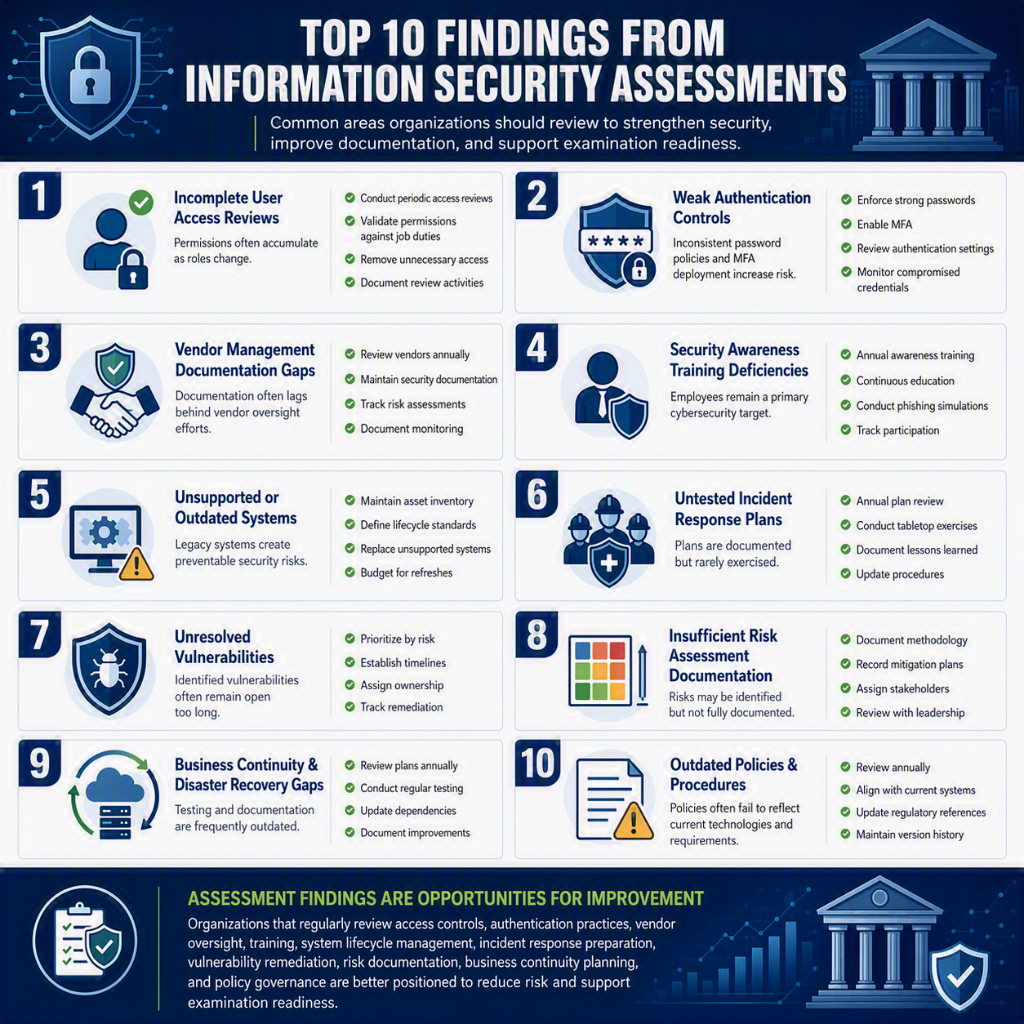
An information security assessment provides an independent review of your organization’s security controls, processes, and overall risk posture. More importantly, it helps leadership identify gaps before they become larger issues during an examination or security event. Here are ten findings that frequently appear in assessments.
Documentation and Follow-Through
Many assessment findings are not caused by a lack of security tools. More often, organizations struggle with documentation, consistency, and ongoing oversight. Examiners want to see evidence that risks are identified, reviewed, and addressed. Strong processes, clear ownership, and accurate records can often make the difference between a finding and a well-managed control. Information security assessments should be viewed as an opportunity to strengthen your security program, not simply prepare for an examination. Proactively addressing common findings can improve security, reduce risk, and help leadership make more informed decisions. If your organization is preparing for its annual review, consider requesting an assessment proposal from BES. Our team helps financial institutions identify security gaps, document risk, and build practical remediation plans.
Request an Information Security Assessment Proposal: Information Security Request Proposal Form
Key Takeaways
-
Most findings involve access controls, documentation, vendor oversight, and cybersecurity processes.
-
Consistent review and documentation can prevent many common findings.
-
A proactive assessment helps improve examination readiness and overall security posture.